
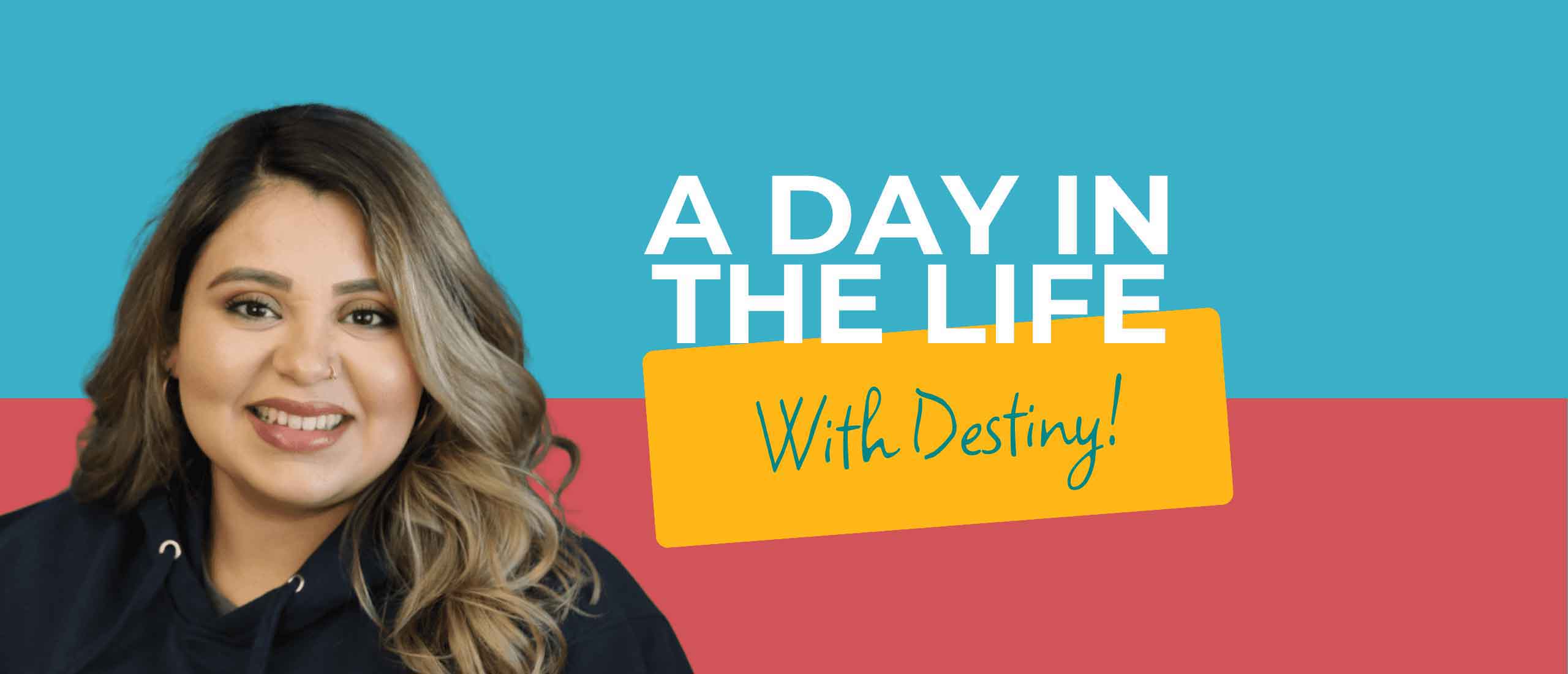
Destiny is a Family Support Specialist with our Parents as Teachers team out of North Chicago. After growing up in the North Chicago community, she is grateful to be serving the neighborhood that raised her.
Can you describe your role and how you support families?
My role is that I go into the homes and bring different activities and materials to help support the child with their development. We also try to connect families with different resources they may need within the community, such as lawyers or food pantries.
What does a typical day look like for you?
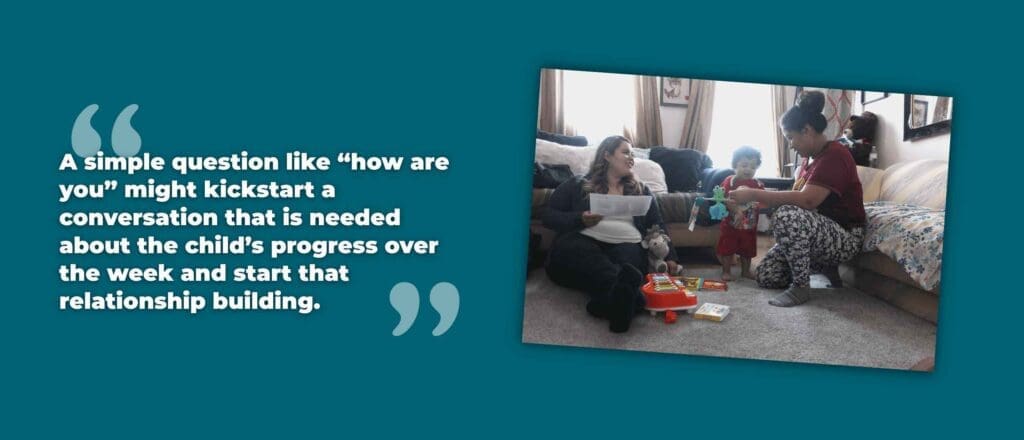
It really depends on the client’s needs. There are some days where I’m in office planning for visits, some days where I have visits back-to-back, or some days that I’m running errands such as picking up diapers or taking a client to an appointment. So, we do a little bit of everything! In sessions, we start with a check-in to see how things have been going since the last time we talked, usually around a week. A simple question like “how are you” might kickstart a conversation that is needed about the child’s progress over the week and start that relationship building. The relationship building is so important to let the families know that we are here for them. Yes, we are here to focus on the child, but we also care about who you are outside of the program. From there, we will do a parent/child interaction, which will be some activity to help promote development, such as fine motor skills, cognitive skills, language, or whatever the family is interested in that week. We also talk about family well-being topics such as nutrition, employment, and community resources.
How do people get involved with Parents as Teachers?
How families enroll varies. Sometimes it is word of mouth, like the family we are visiting today, someone knew about the program and saw the family at the bus stop. There’s then the more formal referral process where some people might go somewhere like the health department or different community events where we will have the opportunity to ask if people are interested in home visiting opportunities. We also call around to different referrals and try to interact firsthand over the phone to help families get a better understanding of what we are all about.
How is Parents as Teachers different than other interventions?
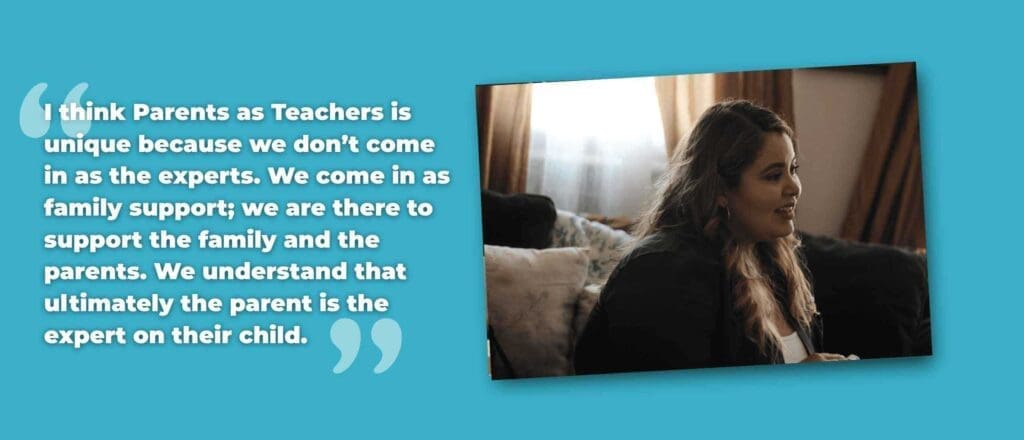
I think Parents as Teachers is unique because we don’t come in as the experts. We come in as family support; we are there to support the family and the parents. We understand that ultimately the parent is the expert on their child. So whatever teaching methods they would like or whatever path they would like to take, we’re there to support them. We have some additional information for them when it comes to things like nutrition or safety, but it’s ultimately the parent that leads the visits. We plan our visits based on what the parent is currently interested in. They could say something like, “hey, currently my child is throwing a lot of tantrums, can you give me some resources for that?” and that’s what we’ll work on that day. It’s a personal plan.
What is your favorite part about working at One Hope United?
This sounds funny, but I think it’s when the families no longer need you. There’s a lot that I love about this job, but some of my favorite clients are the ones I get to see pregnant and then see them graduate. Reflecting back on where they first started and what they’ve become is so special. Seeing them become self-sufficient, especially with my immigrant families. We are teaching them so much from the very beginning: you go to this office, you need this application, and things like that. And then all of the sudden, it’s “hey I just renewed my application that was about to expire,” and I say, “all by yourself?!”
I recently had a client who, at first, I was driving her all around to some of her appointments because she didn’t know how to drive. I just saw her two weeks ago and was so happy that she has her license now! So, seeing them accomplish some of those goals is great. I helped a family get housed once, then they later moved apartments all on their own. I love getting to teach them and then watch them take off all on their own. I think it’s why I hold such a special place in my heart for my immigrant families because you’re teaching them from beginning to end. Is it hard? Sure, because everyone has a need. But the fact that it’s the same community that I grew up in, too, makes it so impactful.
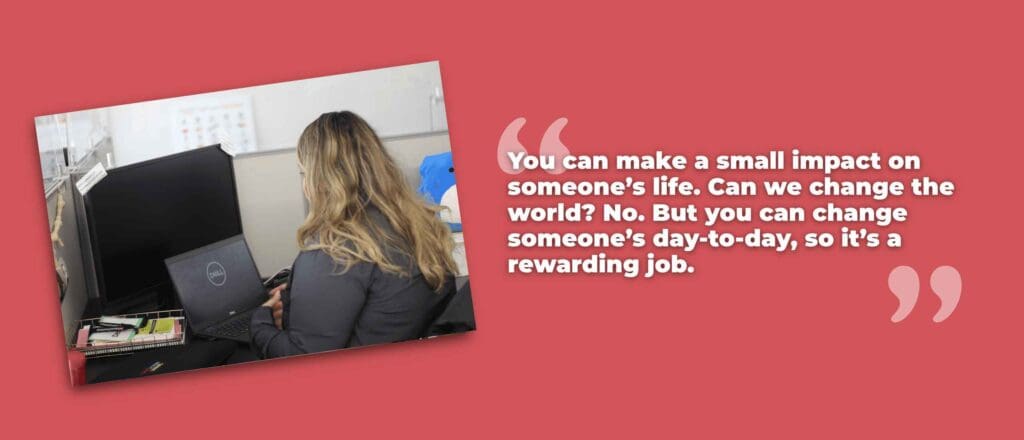
When I first started as a social worker, I had such a fire under me that I was going to change the world. And then a year in, I wasn’t sure that was the case. But now I know that you can make a difference in someone’s day-to-day. You can make a small impact on someone’s life. Can we change the world? No. But you can change someone’s day-to-day, so it’s a rewarding job.
Do you have a specific success story that sticks with you?
I had started with this mom, she had got here from a different country, was pregnant, and didn’t have a healthy relationship with her husband. She was very depressed, which is very common for pregnant moms. I remember this family needed so much, so quickly because she was about to give birth. She needed help with everything: car seats, finding an apartment because of the language barrier. We met twice a week, we called landlords together, went to appointments, and I even visited her the day she gave birth because she was working with one of our doulas. And now, she’s going to graduate this year. She found a really nice apartment on her own, she has a great job, and her relationship is thriving because she was able to express what she needed from her spouse. The child is doing great and just started school two weeks ago. She’s looking forward to life now, and they’re able to support themselves. She’s a great family to work with and I’m so proud of how far they’ve come.
If you’re interested in working for our Parents as Teachers team, check out our careers page.

Join Our Team
grow your why at ohu
We encourage our Hope Members to reflect on the core of their work—their ‘why’. This serves as a symbol, purpose, and commitment to the work we do at OHU. Fulfill your ‘why’ at OHU today!